Category
Science English Lessons
6 lessons covering science English vocabulary, grammar, and real-world phrases.
 B2
B2Data Analytics
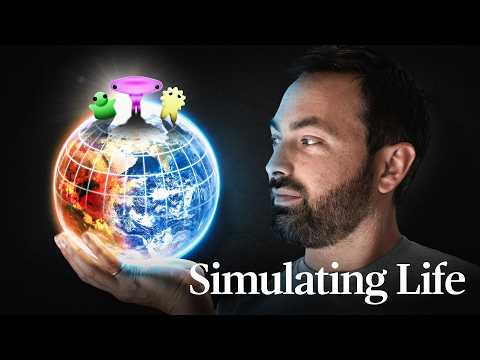
You've (Likely) Been Playing The Game Of Life Wrong
Many aspects of nature and human systems follow power law distributions rather than traditional normal distributions. Unlike normal distributions where data clusters around a predictable mean, power laws govern systems with no intrinsic scale, meaning rare and extreme events heavily dominate the average. This phenomenon often arises from self-organized criticality, where complex systems tune themselves to an unstable threshold where minor triggers can unleash massive, wide-ranging chain reactions, as seen in earthquakes, forest fires, and financial markets. Understanding whether a domain is governed by a normal distribution or a power law is crucial for managing risk and making decisions, as power-law environments reward persistence, smart diversification, and taking calculated risks to capture rare, outsized successes.
 B1
B1Historical Analysis
The Most Controversial Idea In Biology
Evolution is often viewed as the survival of the fittest individual or species, but these models fail to explain altruistic behaviors seen in nature, such as sterile worker ants or squirrels calling out warnings to predators. Popularized by Richard Dawkins in The Selfish Gene, the gene-centric view of evolution posits that the gene itself is the core unit of natural selection. Originating from primitive self-replicating molecules, living organisms evolved over billions of years as complex survival vessels designed to protect and propagate their underlying genetic code. Concepts like kin selection explain how altruism benefits gene survival when organisms assist close relatives who share identical genes. Although criticisms note the influence of genetic drift and complex gene interactions, viewing evolution through the lens of competing genes remains a powerful tool for understanding biological behavior.
 B1
B1Data Science
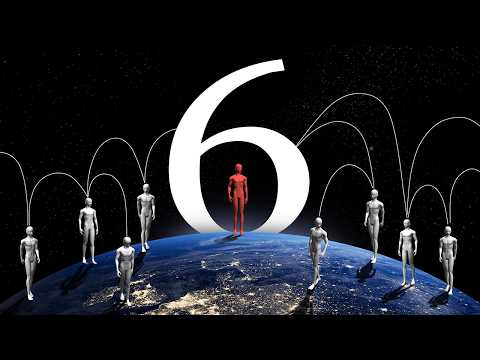
Can you really reach anyone in 6 steps?
The concept of six degrees of separation shows that any two people on Earth can be connected through a short chain of acquaintances. Mathematicians Duncan Watts and Steven Strogatz demonstrated that even highly clustered local communities become small-world networks with minimal average path lengths when just a tiny percentage of random connections, or shortcuts, exist. Further research by Albert-Laszlo Barabasi revealed that real-world networks also expand through preferential attachment, naturally creating highly connected hubs that further shrink distances across systems like the internet, aviation, and biology. These network structures accelerate the spread of information, disease, and behavior, demonstrating that while global connectivity can expose individuals to toxicity or rapid disruptions, strategic targeting of key hubs and intentional choice of personal connections can foster cooperation and drive widespread positive change.
 B1
B1Historical Analysis
Can You Keep Zooming In Infinitely?
Visible light cannot image individual atoms due to its large wavelength, but high-speed electrons possess much smaller wavelengths that make atomic resolution possible. Early electron microscopes developed in the 1930s were limited by spherical aberration because magnetic lenses inherently converge electron beams and cannot easily diverge them. After decades of partial workarounds, scientists in the late 1990s successfully corrected this aberration by using non-symmetric multipole magnets to induce controlled divergence before re-aligning the beam. This breakthrough enabled aberration-corrected transmission electron microscopes to clearly image individual atoms, fundamentally transforming materials science and chemical engineering.
 C2
C2Historical Analysis
How Humans and Dogs Evolved Together
Dogs and humans share a long history of co-evolution that began at least 14,000 to 40,000 years ago when dogs diverged from an extinct population of gray wolves. Rather than an intentional domestication effort by early humans, dogs likely self-domesticated by scavenging around human encampments, leading to a mutually beneficial symbiotic relationship. Over millennia, dogs and humans convergently evolved both socially and genetically, developing shared bonding mechanisms through oxytocin and parallel dietary adaptations to digest starches as agriculture spread. Through gene flow with local wild wolf populations and human migration, dogs successfully adapted alongside humans to diverse environments ranging from freezing Arctic regions to high-altitude mountain ranges.
 B2
B2Medical Research
Is Our Food Becoming Less Nutritious?
Studies show that nutrient levels in crops have declined over the past few decades, marked by decreases in protein, vitamins, and essential minerals. While soil depletion and selective breeding for yield have been considered as causes, rising atmospheric carbon dioxide levels play a major role by speeding plant growth and increasing carbohydrates, which dilutes essential nutrients. Although a balanced diet still provides sufficient nutrition for most individuals, these shifting nutrient ratios could exacerbate protein deficiencies in developing regions and contribute to global obesity as people consume more calories to meet their protein needs.