Category
Economics English Lessons
11 lessons covering economics English vocabulary, grammar, and real-world phrases.
 B1
B1Economic Forecasting
Why the UK has an Impossible Debt Crisis
The United Kingdom is facing a severe national debt crisis, with public debt surpassing the total size of its economy and borrowing costs climbing to historical highs. Decades of low economic growth combined with heavy spending following the 2008 financial crash, Brexit, and COVID-19 pandemic bailouts have driven debt to nearly 2.9 trillion pounds. High interest rates now force the government to spend over 100 billion pounds annually just to service existing debt, diverting crucial funding from public services like health and education. With domestic pension funds reducing their holdings and foreign investors demanding higher yields, the country risks a total collapse of investor confidence. Because cutting public services, raising taxes, or printing money each carry major political and economic dangers, the UK faces narrow, painful choices to restore fiscal stability and safeguard its global financial reputation.
 A2
A2Economic Forecasting
All of Economics in 20 Minutes
Economics centers on the fundamental problem of scarcity, which forces individuals, businesses, and governments to make choices amidst limited resources. Concepts like opportunity cost, comparative advantage, and trade structure markets, where prices are determined by supply and demand driven by incentives. Money facilitates exchange, while factors of production and labor productivity dictate overall output, measured through Gross Domestic Product. Governments and central banks attempt to stabilize economic cycles, manage inflation, and fund public goods through monetary and fiscal policies. International trade allows countries to specialize and access broader supply chains, though it introduces vulnerabilities to global supply shocks and currency fluctuations. Ultimately, different economic systems combine market mechanisms and policy interventions to address resource allocation, human behavior, and financial stability.
 B2
B2Globalization
Have These Countries Drowned Themselves in Tourism?
Across major global destinations, rising mass tourism has triggered local protests and government pushback due to overcrowding, housing displacement caused by short-term rentals, and lower economic returns from budget travel. Although tourism provides critical revenue and job opportunities for struggling economies, low-spending travelers, cruise ships, and unmanaged visitor numbers often fail to offset local disruptions. To protect residents while maintaining crucial revenue, governments are increasingly adopting strategies such as tourist taxes, two-tier pricing, restrictions on Airbnbs, and high-value, low-impact travel models.
 B2
B2Globalization
The Moment America Changed Forever
President Bill Clinton's decision in 2000 to grant China permanent normal trade relations and facilitate its entry into the World Trade Organization fundamentally altered the global economy. While the policy initially delivered lower consumer prices and expanded export markets for American agriculture, it rapidly triggered the loss of millions of U.S. manufacturing jobs, devastated industrial communities, and created a profound economic reliance on Chinese manufacturing. Subsequent presidential administrations failed to mitigate these structural disruptions, ultimately leading to recent bipartisan efforts to counter China through tariffs and trade barriers. Today, both nations remain entangled in a mutually destructive economic relationship marked by trade uncertainty, supply chain vulnerabilities, and geopolitical tension.
 C2
C2Economic Forecasting
The World's Fastest Growing Economy
Guyana is currently experiencing unprecedented economic growth driven by major offshore oil discoveries, making it one of the world's fastest-growing economies. This influx of wealth has spurred rapid infrastructure development, increased international business presence, and higher consumer spending. However, the country faces significant challenges in avoiding the resource curse, including risk to local non-oil industries, political instability, ethnic divides, and territorial aggression from neighboring Venezuela. To secure sustainable long-term prosperity, the democratic government is utilizing a sovereign wealth fund to direct oil revenues toward economic diversification, energy independence, and national infrastructure investments.
 C2
C2Globalization
Skills Wars Are the New Trade Wars
While traditional trade wars center on tariffs and quotas on physical goods, the modern global economy is increasingly defined by competition for skilled labor. Free movement of educated workers offers significant benefits to receiving nations, which gain high-value skills and tax revenues, but creates a brain drain in sending countries that bear the cost of subsidizing education without reaping the long-term economic returns. To manage this shifting workforce, nations are beginning to apply economic mechanisms similar to trade controls, ranging from visa quotas and subsidies like tax incentives to citizenship-based taxation and geopolitical employment bans. While attracting top talent boosts individual national economies, restricting human mobility risks limiting global productivity and individual freedom.
 B2
B2Public Policy
The Housing Crisis is the Everything Crisis
The widespread housing shortage and rising real estate costs across Western nations serve as a primary root cause for a multitude of economic, social, and political problems, including stagnant economic growth, increased poverty, high carbon emissions, declining health outcomes, falling birth rates, and rising political extremism. Historical shifts from treating housing as an affordable consumer commodity to an investment asset, combined with restrictive zoning laws, cumbersome planning permissions, and NIMBY opposition, have severely limited housebuilding and artificially inflated costs. Restoring prosperity, reducing homelessness, encouraging density, and revitalizing democratic societies ultimately require systemic reforms to lower regulatory barriers and significantly increase the overall supply of homes.
 B2
B2Supply Chain
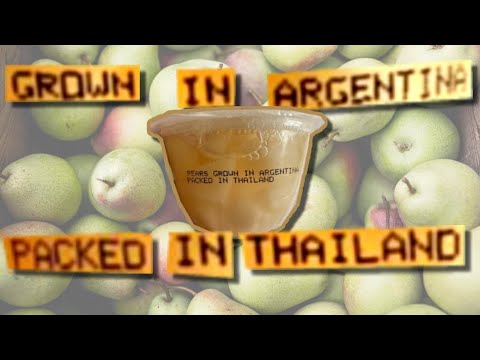
Grown in Argentina, Packed in Thailand
Globalized supply chains often rely on the principle of comparative advantage to deliver products efficiently and affordably. For example, pears grown in Argentina are shipped to Thailand for processing and packaging because Argentina specializes in high-quality agriculture, while Thailand offers specialized processing facilities located near major consumer markets for preserved fruit. Utilizing long-distance maritime shipping to transport these goods is remarkably cost-effective, adds minimal cost per item, and generates lower carbon emissions per unit compared to domestic road transport, making international supply chains both economically and environmentally practical.
 B2
B2Market Analysis
The Art Market is a Scam (And Rich People Run It)
The high-end art market is relatively small, highly consolidated, and tightly controlled by a few exclusive gatekeepers, auction houses, and ultra-wealthy collectors. Because artwork lacks intrinsic value, prices are largely subjective and easily manipulated by key players. The lack of regulation allows ultra-rich individuals to engage in legal and illegal financial maneuvers, such as strategic bidding to inflate portfolio values, tax avoidance through overvalued artwork donations, and money laundering. This exclusive environment transforms art into a speculative asset and branding tool, benefitting a tiny elite while marginalizing everyday artists and investors.
 B2
B2Economic Forecasting
The Biggest Wealth Transfer in History is Upon Us
The impending shift of an estimated $30 trillion in assets from the baby boomer generation to younger heirs represents the largest wealth transfer in history. While this financial influx could help younger generations pay off debt or boost consumer spending, much of the liquid inheritance may be quickly spent rather than strategically invested. Furthermore, a major portion of this wealth consists of private, family-run businesses that face high failure rates during generational transitions. Mismanaging this transfer or imposing heavy estate tax burdens could disrupt these enterprises, leading to broader economic friction, job losses, and supply chain issues despite creating new market opportunities.
 C2
C2Public Policy
How Singapore Solved Housing
Singapore solved its housing crisis by tasking the Housing and Development Board (HDB) to aggressively acquire land and construct high-quality, self-contained public housing estates. Funded through mandatory savings from the Central Provident Fund, public flats house 80% of the population and are made affordable through government subsidies and strict market regulation. However, this model relies on 99-year leases, heavy-handed social planning such as ethnic quotas, and an extraordinary level of state control, making Singapore's housing system difficult to replicate in other nations.